The current crisis is a tragic, undeniable argument for why we must accelerate the transition to Renewable Energy.
Julien Jreissati – Programme Director at Greenpeace Middle East and North Africa
Not just an energy goal but a security imperative
When the global economy is dependent on a centralised, combustible resource, missiles do more than just cut off power or disrupt shipping. They rock the very foundation of global stability.
Strengthening the grid: You cannot “blow up” the sun. It is incredibly difficult to disable a decentralised network of millions of rooftop solar panels. Distributed energy is inherently more resilient to sabotage than a handful of massive, vulnerable thermal plants.
Ending energy dependency: Conflict brings blockades and supply chain collapses. A country that produces its own power from its own sun and wind cannot be held hostage by disrupted shipping lanes or volatile oil markets.
Economic sovereignty: As prices soar, nations relying on imported fuels face crippling inflation. Transitioning to local renewables acts as a “hedge” against war driven shocks, keeping costs predictable for families when they are most vulnerable.
Decentralisation as defence: By removing “single points of failure”, we ensure that hospitals, schools, and homes can maintain power even if the national grid is compromised.
Greenpeace has long advocated for energy sovereignty, but the current situation proves this isn’t a “green” luxury. It is a strategic necessity.
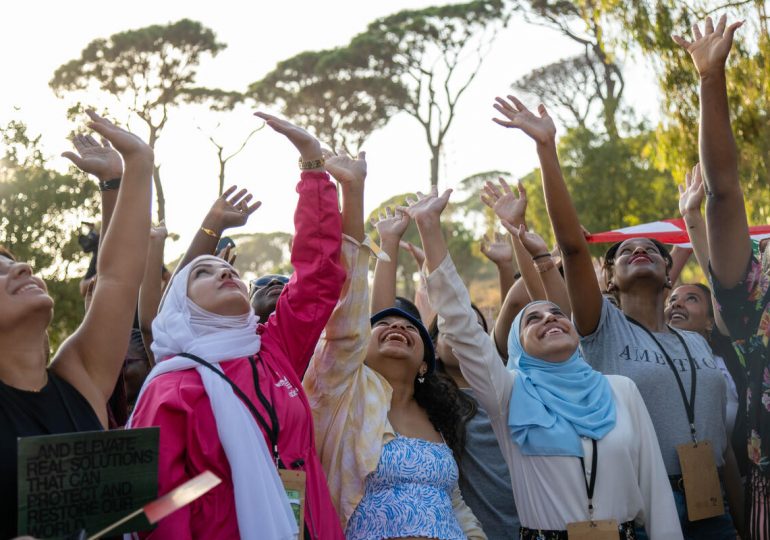
Led by climate groups across the Middle East and North Africa, youth organisers and mobilisers from almost 100 countries attended the week-long Climate Justice Camp in Lebanon. © Pamela EA / Greenpeace
This isn’t just about carbon emissions or climate targets. It’s about resilience, security, and survival.
We need to build energy systems that are as resilient as the people who rely on them. Renewables are the best (and much needed) way to make that happen.
Author: Julien Jreissati – Programme Director at Greenpeace Middle East and North Africa
Leave a comment