
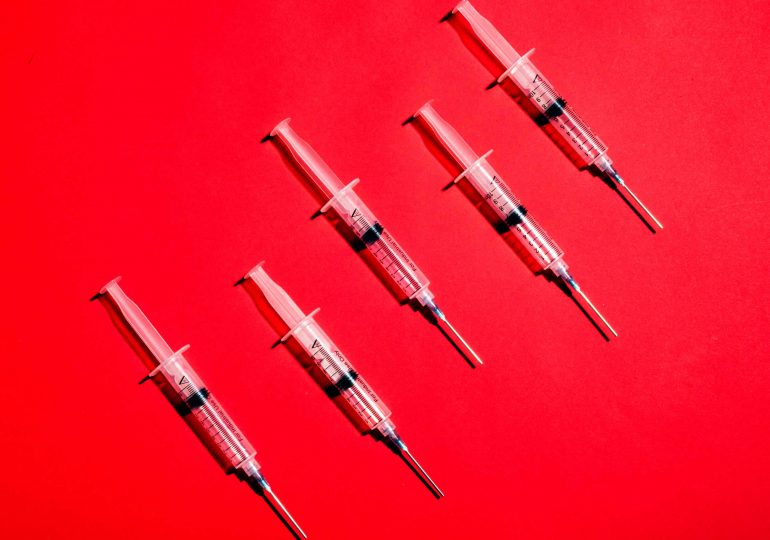
Droves of wellness enthusiasts, biohackers, social-media influencers, and celebrities are injecting experimental “anti-aging” peptides in the hopes of boosting energy, losing weight, sleeping better, healing injuries, enhancing libido, and even getting tanned.
Most of these therapies haven’t been approved by the U.S. Food and Drug Administration (FDA), and many people in the U.S. are buying them online off the unregulated “gray market,” often from suppliers in China. For most of these drugs, there is little clinical evidence of their effectiveness and safety, and many doctors warn of their potential risks. “There isn’t any meaningful data on these peptides,” says Dr. Eric Topol, a cardiologist, longevity expert, and director of Scripps Research Translational Institute. “People are taking them on blind faith.”
[time-brightcove not-tgx=”true”]
Still, the popularity of these drugs is surging.
Tens of thousands of people on TikTok, Reddit, and Instagram swear by their transformative effects and are swapping stories of the “stacks,” or combinations of peptides, that they are experimenting with. Celebrities including Jennifer Aniston and Gwyneth Paltrow, and influential podcasters Joe Rogan, Andrew Huberman, and Dr. Mark Hyman, have waxed lyrical about their potential health-boosting benefits. Another fan is Robert F. Kennedy Jr., secretary of the U.S. Department of Health and Human Services, who has vowed to end the FDA’s “aggressive suppression” of peptide therapies.
Here’s what you need to know about peptides, and what the science actually says about them.
What are peptides?
Peptides are short chains of amino acids, which are the building blocks of proteins. In the body, they play a key role in many biological processes, including immune function and hormone production.
Peptides can be found in skincare products that are consumed or slathered on the skin, such as collagen supplements and creams. There are also dozens of FDA-approved peptide drugs, most of them injectable: Insulin and GLP-1 drugs (the “P” stands for peptide) for diabetes and obesity are among the best known.
But there are a slew of other injectable peptides that haven’t been approved by the FDA and haven’t undergone rigorous testing in people, but have nonetheless attracted the interest of longevity chasers, health enthusiasts, athletes, and others. Many of these peptides have hard-to-remember names like BPC-157 (which people are using for injury recovery and to improve athletic performance); TB-500 (which purportedly boosts muscle growth and reduces inflammation); CJC-1295 (which proponents say can promote fat loss and better sleep); and GHK-Cu (which supposedly promotes healthy skin and hair).
People are also experimenting with a handful of peptides that have been FDA-approved for narrow indications but that they are using “off-label”—in other words, taking them for a different purpose than what the FDA authorized them for. Tesamorelin, for example, is a drug that was approved by the FDA to treat HIV-related lipodystrophy, or abnormal fat redistribution, that is being used off-label by some people to lose fat and boost muscle mass.
Read More: Can I Tell Someone They Need Therapy?
“Here is a drug shown to work in people with a very rare condition, and people are now taking it to get rid of abdominal fat to get a six-pack. It’s crazy,” Topol says. “There’s no data to support that.”
People on social media describe experimenting with multiple peptides at once—either as stacks, which have names like “Wolverine” and “Fountain of Youth,” or as blends, which are multiple peptides mixed together in the same vial.
Some peptide enthusiasts claim they are safe since they naturally occur in the body. But that assumption is dangerously inaccurate, says John Fetse, assistant professor of pharmaceutical sciences at Binghamton University in New York. “Peptides could potentially be very potent and very toxic,” he says. Toxins in many animal venoms, for example, are peptides.
When did the unapproved peptide boom begin?
Unapproved peptides were once confined to niche bodybuilder communities, but are rapidly “becoming mainstream,” says Luke Turnock, a researcher at the University of Lincoln in the U.K. who has been studying the rise of the drugs.
Turnock says he first learned about peptides such as BPC-157 and GHRP-2, which stimulates the release of growth hormone in the body, around 2010 from bodybuilders and powerlifters steeped in “hardcore gym cultures” who were experimenting with the drugs to build muscle and strength. These athletes—usually men—bought the drugs, often alongside steroids, from “really obscure” and underground places, Turnock says.
Fast forward about a decade to 2020, and Turnock says he started hearing of everyday people taking the same peptides to improve their health and amplify their looks. A study he published in 2025 described how, based on discussions on a popular online fitness forum, people of all ages were starting to dabble in peptides. “We found that a lot of older men, but also some women, were taking peptides to feel younger, to recover, to have more energy,” Turnock says.
Read More: Why You Can’t Remember Being a Toddler
There has also been an explosion of interest among younger men in recent years—the same men who “might be susceptible to taking steroids,” Turnock says, but who are turning to peptides instead to get the muscle-bound physiques they want.
Steroids used for muscle growth are compounds that mimic the effects of hormones like testosterone. Peptides used for the same purpose are different in that they encourage the body to produce hormones such as testosterone and growth hormone.
“There’s a certain stigma attached to steroids that peptides don’t have,” Turnock says.
Are these peptides legal? How are people buying them?
People in the U.K. and U.S. typically turn to the gray market—sources outside of regulated pharmaceutical channels—to obtain unapproved peptides, Turnock says. A search on Google turns up many websites, some masquerading as online pharmacies, that purport to sell the drugs. Influencers on TikTok and Instagram advertise links through which peptides can be purchased. Most of these drugs are shipped from China, Turnock says, adding that many users buy syringes on Amazon to administer the peptide shots and watch videos on YouTube and TikTok about how to inject themselves.
These unapproved peptides are often labeled as products “for research purposes only” and that are “not for human consumption,” which allows sellers to bypass regulatory oversight, says Fetse, whose lab is developing therapeutic peptides. “By labeling it this way, suppliers could potentially absolve themselves of liability. The liability is on you, the consumer,” he says.
People in the U.S. had previously been able to purchase some unapproved peptides from compounding pharmacies—businesses regulated by states and are subject to inspection by the FDA that can create customized medications for patients. But in 2023, the FDA deemed many popular peptides to lack sufficient data to support their safe use and restricted compounding pharmacies from making them.
Read More: Scientists Are Finding Out Just How Toxic Your Stuff Is
“What the FDA crackdown on peptides did was create this gray market,” says Jordan Glenn, head of science at SuppCo, an app that allows users to manage and learn more about their health supplements. “We moved from a—I’m not going to call it regulated, but safer—model, to this ‘trust me, bro’ kind of situation. I could go online right now and buy these peptides, but I wouldn’t know what their quality is or what their purity is.”
Glenn says SuppCo will be launching a peptides tracker at the end of March in response to rising demand for the feature. A recent survey sent out to SuppCo’s 640,000 users found that almost 90% of respondents were interested in being able to track peptides on the app, the company says.
“People want these peptides, and if you don’t give them a safe way to get them, they’re going to go and find an alternative route,” Glenn says.
The FDA still permits some peptides to be made by compounding pharmacies. Joshua Fritzler, chief financial officer at U.S. compounding pharmacies Olympia Pharmaceuticals and Wesley Pharmaceuticals, said demand for some of these products has skyrocketed over the past three years.
Interest in two products in particular has sharply increased, Fritzler said: sermorelin, a drug that was previously approved by the FDA to treat children with growth hormone deficiency, and NAD+, which isn’t technically a peptide but is often marketed as one. People are taking sermorelin for muscle growth and fat loss, and proponents claim NAD+, a molecule found in the body that is central for metabolism, has anti-aging and energy-boosting properties.
“We used to do 3,000 to 4,000 vials a week of these two products. We do 20 times that now,” Fritzler says.
Why are peptides so popular?
“Social media has really been driving this,” says Chris Mendias, a rehabilitation clinician-scientist and co-founder of Performance Medicine Institute, an integrative sports medicine practice in Phoenix. “People always want to look better and perform better, and if they see someone on TikTok who is where they want to be and they’re pushing a peptide, they might think it’ll work for them too.”
Mendias says about half of his clinic’s patients have expressed interest in peptides. “This interest spans all demographics,” he says, adding that the popularity—and proven effectiveness—of GLP-1 drugs has spurred some of this enthusiasm.
The endorsement of high-profile influencers and celebrities have also helped fuel the peptide craze. Actor and Goop founder Gwyneth Paltrow has called peptide shots one of her “biggest wellness tools;” podcaster Joe Rogan said BPC-157 helped heal an injury he had struggled with; and American mixed-martial artist Derrick Lewis recently claimed that the Ultimate Fighting Championship (UFC) had “provided me with some great peptides.”
Read More: Can Creatine Keep Your Brain Sharp?
“I’ve been taking it every day, and I’ve been feeling a difference,” said Lewis on a January podcast episode. (UFC leadership promptly pushed back, saying Lewis had “misspoke” and that the organization doesn’t provide peptides, most of which are banned in the UFC, to its fighters.)
Kennedy, currently America’s top health official, has also expressed support for peptides. Speaking to Gary Brecka, a popular biohacker who promotes peptides, on a podcast last May, Kennedy promised to “end the war at FDA against alternative medicine—the war on stem cells, the war on chelating drugs, the war on peptides.”
Do peptides work?
Unapproved peptides haven’t undergone the rigorous clinical trials that would be needed to prove their effectiveness. For some of these peptides, such as BPC-157, limited animal studies have been conducted that suggest potential therapeutic effects, such as injury repair, but without robust follow-up studies in people, these benefits haven’t been validated.
As for people online who claim peptides have worked wonders for them, the placebo effect is a possible explanation, says Mendias, the rehabilitation expert.
“I have yet to find a gray-market peptide that is as safe and effective as something that is currently FDA-approved,” says Mendias, who in December published a paper on the safety and efficacy of many unapproved peptides. The paper, which hasn’t been formally peer reviewed, concluded that “clinical trials and robust safety data are needed now more than ever to bridge the widening chasm between myths perpetuated online and actual science.”
Are unapproved peptides safe?
Until clinical trials are conducted, the safety of unapproved peptides also remains unknown.
Several popular peptides work by enhancing the body’s response to growth hormone, which doctors say could have an unintended consequence of promoting tumor growth.
The fact that people are experimenting with multiple peptides at once is also a concern as it isn’t clear how these drugs may interact with one another, says Topol, the longevity expert who has written about the risks of peptides.
An added worry is the legitimacy of products that people are purchasing off the gray market, Topol says. “They don’t know what they are getting. It could be saline, it may not even be sterile. They could get an infection. Who knows?” he says.
At least 20% of unapproved peptides tested since October by BTLabs, a drug-testing company, were found to be mislabeled, says Rina Dukor, a chemist and the company’s co-founder. For example, “the vial will say retatrutide,” an experimental obesity drug being developed by pharmaceutical giant Eli Lilly, “but it’s actually semaglutide,” a GLP-1 drug, Dukor says. “Or it’ll say Glow, but it’s actually Klow, or vice versa,” she adds, referring to different peptide blends.
BTLabs is among a growing number of companies that are providing peptide testing for people who want to verify the quality of the drugs they are buying online. BTLabs partnered with a peptide-testing start-up called Finnrick last year to test peptides for suppliers and consumers. People can send Finnrick samples of peptides they have purchased online to be tested. Finnrick says it works with several labs and testing companies, including BTLabs, to test the samples. It has a database on its website that lists the test results of peptides from different suppliers.
Dukor says BTLabs has tested thousands of unapproved peptide samples to date. In some cases, samples have been contaminated. In most vials, the concentration of the peptide on the label hasn’t matched what is in the container, Dukor says.
There have been reports of people suffering adverse effects from taking peptides. At an anti-aging conference last year, two women were hospitalized in critical condition after receiving peptide injections at a booth run by a doctor specializing in “age reversal” therapies, ProPublica reported.
On social media, people describe suffering from a range of side effects after experimenting with unapproved peptides, including migraines, weakness, depression, nausea and vomiting, and anhedonia, a condition in which people stop being able to experience joy or pleasure. Mendias says he has seen patients who have dealt with adverse reactions that appear to be connected to their unapproved peptide use, including one person who “started peeing blood” after taking BPC-157.
“I would exercise extreme caution—caution with a capital C—when taking these drugs,” Topol says. “Just because your friend or your influencer told you that it worked doesn’t mean anything.”
Leave a comment