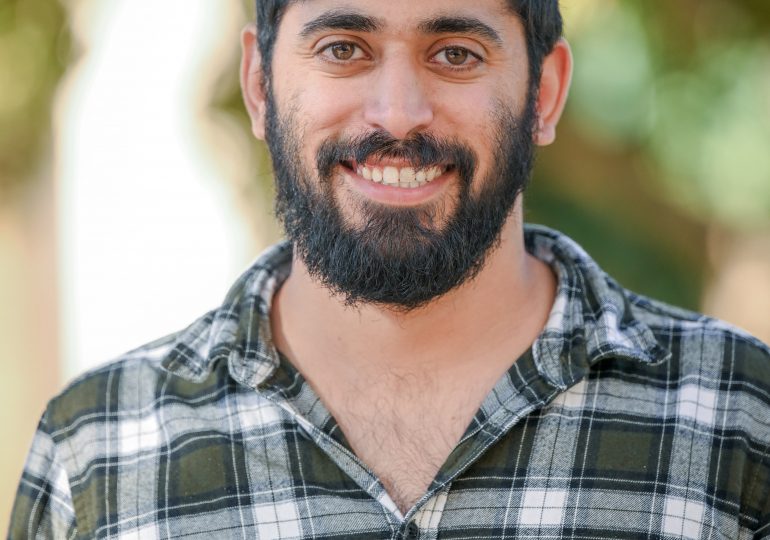
2025 HALDANE PRIZE SHORTLIST: Alon Rapaport discusses his paper “Rapid and chemically diverse C transfer from trees to mycorrhizal fruit bodies in the forest“, which has been shortlisted for Functional Ecology’s 2025 Haldane Prize for Early Career Researchers.
About the paper
Our research explores the transfer of carbon (C) from trees to ectomycorrhizal fungi (EMF) in forest ecosystems. Specifically, we aimed to identify the chemical forms and speed of this transfer under field conditions. By pulse-labeling Pinus halepensis trees with 13CO2, we traced the assimilated carbon into the roots and adjacent fungal sporocarps. We sought to answer how quickly this happens and what exactly is being transferred, challenging the old assumption that only simple sugars move between the symbionts.
I was genuinely surprised by both the speed and the chemical diversity of the transfer. Carbon reached the adjacent mushrooms in just a few days. Moreover, instead of merely sugars, we identified over 100 distinct metabolites, ranging from amino acids to nucleotides and fatty acids. A major challenge was conducting isotopic labeling on entire young trees in the field, which required covering them with plastic sheets from sunrise to sunset and then precisely tracking these metabolites using non-targeted metabolomics across different tissues. Additionally, it was the first time isotopic labeling was coupled with metabolomics techniques in this whole-tree labeling setup to find metabolites of varying molecular weights having different amounts of labeled carbon.
The immediate next step in this field is to understand the broader ecological implications of this diverse chemical transfer. We will need to map how these specific metabolites dictate host specificity and shape the belowground fungal communities and the aboveground tree and plant communities. Furthermore, expanding this research to observe carbon sharing among multiple tree hosts and different mycorrhizal fungi in complex, mature forest networks will be crucial. This will help us better predict forest resilience and belowground carbon sequestration under changing global climates.
Understanding that mycorrhizal fungi act as highly specific rapid carbon pumps fundamentally shifts how we view forest carbon cycles. This research highlights the vital role of these fungi in belowground carbon sequestration and sharing. For forestry and conservation policy, this means that protecting soil fungal networks is just as important as protecting the trees aboveground, especially since global warming is threatening the diversity of these essential ectomycorrhizal tree symbionts.
About the author
My connection to nature started with hands-on experience picking apples and cherries in a farm, followed by a transformative yearlong nature trip across South America. These grounding experiences led me to pursue a BSc at the Faculty of Agriculture (Plant Sciences, nature conservation track), deepening my fascination for natural ecosystems. Later at the Weizmann Institute of Science, I became captivated by how trees communicate and share resources through belowground mycorrhizal networks. The profound implication of these tree-to-tree connections drove me to investigate these field symbioses, combining my passion for plant biology and ecology with advanced biochemical tools.
I currently work as a research and development plant scientist at an agritech startup called WeedOUT. In this role, I bridge my academic background in plant sciences with a longstanding desire to preserve nature. We focus on developing biological solutions to significantly reduce the use of harmful chemical herbicides. My day-to-day involves driving agricultural innovation through projects like optimizing drone flight planners and developing AI-based tools for detecting pollen germination in microscopy images. Alongside this, since I wrote this paper, I have completed my Master’s degree at the Weizmann Institute.
While my daily focus has shifted to the agritech industry and biological weed control, the research on mycorrhizal networks continues. Although I am not directly continuing fieldwork myself, follow-up studies in my former laboratory at the Weizmann Institute are currently expanding our findings. They are identifying the specific metabolites transferred among tree hosts and fungal networks. Using data, insights, and advice I collected, they are moving beyond the single tree-fungus symbiosis to better understand wider forest dynamics and resilience.
I would advise anyone in my field: don’t be afraid to question long-held assumptions. For a long time, the field assumed carbon transfer to fungi was rather simple and consisted mostly of simple sugars. However, by integrating advanced non-targeted metabolomics into complex field ecology, we uncovered a surprisingly rich chemical dialogue. I highly encourage early-career researchers to actively bridge different disciplines (in this case also literally) like merging classic field ecology with cutting-edge metabolomics. Interdisciplinary approaches allow us to see the full picture and lead to the most comprehensive discoveries.
Read the full list of articles shortlisted for the 2025 Haldane Prize here.
Leave a comment