
2025 HALDANE PRIZE SHORTLIST: Carolina Olguín Jacobson discusses her paper “Recovery mode: Marine protected areas enhance resilience of invertebrate species from marine heatwaves”, which has been shortlisted for Functional Ecology’s 2025 Haldane Prize for Early Career Researchers
About the paper
Imagine your town was suddenly hit by an extreme heatwave, not for a few days, but for months or even years. And imagine you couldn’t escape it. That’s the reality marine organisms face during marine heatwaves (MHWs) — prolonged periods of anomalously warm ocean temperatures. These events are becoming more frequent and intense due to climate change, pushing marine ecosystems to their limits, especially species that can’t move away or seek deeper waters to find cooler temperatures.
In our study, we examined how the 2014-2016 MHWs, the strongest and longest MHWs ever recorded in the Northeast Pacific Ocean, impacted kelp forest communities, and assessed whether marine protected areas (MPAs) helped these species resist and recover from these extreme events. Our research focused on Isla Natividad, a small island off the coast of Baja California Sur, Mexico. There, the local fishing cooperative, called Buzos y Pescadores de la Baja California, holds exclusive fishing rights and are responsible for enforcing local management and regulations. In 2006, they voluntarily established two no-take marine reserves.
Our findings showed that while marine reserves couldn’t fully prevent the impacts of the MHWs, they did boost resilience for some key invertebrate species. Sedentary species like abalone and turban snails not only better resisted the heatwave inside the reserves, but they also recovered faster! In fact, abalone biomass inside the reserves quadrupled in the years following the heatwave, something we didn’t observe in the fish community or in more mobile species such as spiny lobsters.
The main take home message was that these results have an impact beyond Isla Natividad. They suggested that MPAs, especially when well-managed and tailored to species with localized movement patterns, can be effective tools for climate adaptation. Although the benefits are species-specific and not universal, marine reserves remain a key strategy for building resilience in warming oceans.
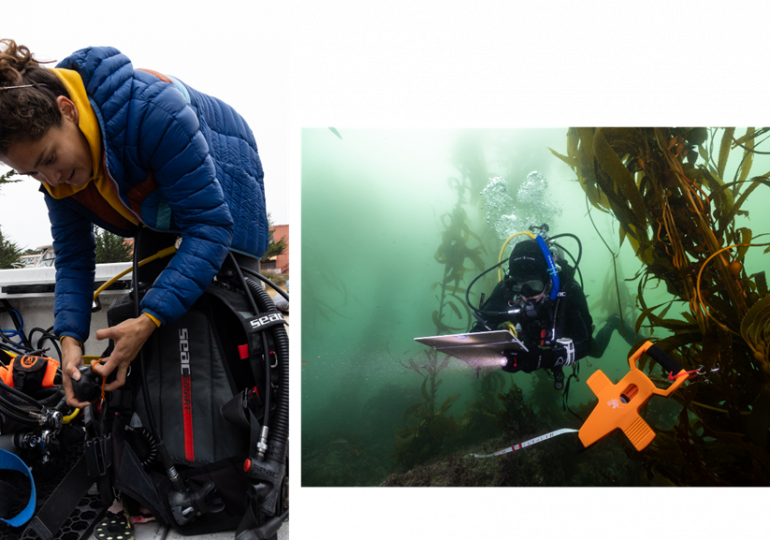
One of the most valuable aspects of our study is the dataset itself: 15 years (2007–2021) of long-term ecological monitoring made possible through a unique collaboration between the local fishing cooperative of Isla Natividad, the Mexican NGO Comunidad y Biodiversidad A.C., and Stanford University. People often underestimate what 15 years of data truly represent. But think back—where were you 15 years ago? How much has changed since then? That’s the kind of depth and perspective this research offers. When the cooperative established the two no-take marine reserves in 2006, several male fishers received training to conduct the underwater surveys. This group has evolved since then, in 2013 two women joined the monitoring team, and by 2019 the group “Sirenas de Natividad” (mermaids from Natividad) was officially formed. Today, five women lead and coordinate the kelp forest monitoring on the island. Sirenas de Natividad are now expanding, inspiring other women in fishing communities of Mexico.
Since 2006, the cooperative has conducted annual surveys inside and outside the reserves generating an invaluable long-time timeseries that allows us to detect ecological changes, understand species responses to extreme events and assess the effectiveness of marine protection over time. I cannot emphasize enough the importance of sustained monitoring across ecosystems, multiple taxa and regions, without this kind of long-term data we would miss the signals of resilience and change in a population.
What surprised us most was the remarkable difference in recovery among species. While we expected some benefits from the reserves, we didn’t anticipate such a strong and sustained rebound in abalone after the heatwaves. This outcome provides new evidence on the efficacy of MPAs as climate adaptation tools and shows that marine reserves can indeed bolster resilience for some species following climate-driven disturbances.
Looking ahead, our next step is to evaluate whether similar patterns exist in other marine reserves along Baja California Peninsula. We want to compare ecosystems and management approaches, and to better understand the ecological traits and mechanisms through which marine reserves may confer climate resilience.
About the author
My journey as a biologist began with studying the taxonomy of sea cucumbers during my undergraduate degree at the Universidad Nacional Autónoma de México (UNAM). After that, my focus shifted to a broader marine aspect. For my Master’s, in La Paz, Baja California Sur, I researched the effects of different temperatures on jellyfish. Then, pursuing a lifelong dream, I moved to Australia for my PhD, where I continue working with jellyfish but investigating the impacts of pesticides on the different life history stages.
After completing my PhD, I wanted to strengthen my fieldwork skills. I am now a postdoctoral researcher at Hopkins Marine Station of Stanford University, focusing on kelp forests ecosystems, marine reserves and small-scale fisheries. I also co-established MasKelp foundation, an NGO that aims to understand and protect kelp forests in Latin America. I’ve been trained to identify and monitor fish and invertebrates in kelp forests and have worked closely with fishing communities to monitor a network of oceanographic sensors. I feel incredibly fortunate to explore such remote and beautiful places to conduct underwater surveys. If I could give a piece of advice to my younger self, it would be “don’t be afraid to switch fields if your interests evolve, there’s a world of incredible things to discover.”
En Español
Sobre el artículo
Imagina que una ola de calor extrema llega a tu ciudad, pasan unos días, luego meses y luego años. Ahora imagina que no puedes escapar de la ciudad. Esa es la realidad que enfrentan los organismos marinos durante las olas de calor marinas (MHW, por sus siglas en inglés): periodos prolongados de temperaturas oceánicas anormalmente cálidas. Estos eventos son cada vez más frecuentes e intensos debido al cambio climático, lo que lleva a los ecosistemas marinos al límite, especialmente para aquellas especies que no pueden moverse o buscar aguas más profundas para encontrar temperaturas más frías.
En nuestro estudio, examinamos cómo las MHW de 2014–2016, las más fuertes y largas jamás registradas en el noreste del Océano Pacífico, impactaron las comunidades de bosques de kelp, y evaluamos si las áreas marinas protegidas (AMP) ayudaron a estas especies a resistir y recuperarse de estos eventos extremos. Nuestra investigación se centró en Isla Natividad, una pequeña isla frente a la costa de Baja California Sur, México. Allí, la cooperativa pesquera local, llamada Buzos y Pescadores de la Baja California, tiene derechos exclusivos de pesca y es responsable de aplicar las regulaciones y el manejo local. En 2006, establecieron voluntariamente dos reservas marinas estrictas (no se permite ningún tipo de extracción).
Nuestros hallazgos muestran que, si bien las reservas no pudieron prevenir completamente los impactos de las MHW, sí aumentaron la resiliencia de algunas especies clave de invertebrados. Especies sedentarias como el abulón y los caracoles turbante no solo resistieron mejor dentro de las reservas, sino que también se recuperaron más rápido. De hecho, la biomasa de abulón dentro de las reservas se cuadruplicó en los años posteriores a la ola de calor, algo que no observamos ni en la comunidad de peces ni en especies más móviles como la langosta espinosa.
El mensaje principal de este estudio es que estos resultados tienen relevancia más allá de Isla Natividad. Sugerimos que las AMP, especialmente cuando están bien gestionadas y adaptadas a especies con movimientos localizados, pueden ser herramientas eficaces de adaptación climática. Si bien, los beneficios no son universales y dependen de cada especie, las reservas marinas siguen siendo una estrategia clave para construir resiliencia frente al calentamiento de los océanos.
Uno de los aspectos más valiosos de nuestro estudio es el conjunto de datos: 15 años (2007–2021) de monitoreo ecológico a largo plazo, posible gracias a una colaboración única entre la cooperativa pesquera de Isla Natividad, la ONG mexicana Comunidad y Biodiversidad A.C. y la Universidad de Stanford. A menudo se subestima lo que realmente representan 15 años de datos. Pero piensa: ¿dónde estabas hace 15 años? ¿Cuánto ha cambiado desde entonces? Ese es el tipo de profundidad y perspectiva que ofrece esta investigación. Cuando la cooperativa estableció las dos reservas marinas estrictas en 2006, varios pescadores hombres recibieron capacitación para llevar a cabo los monitoreos ecológicos. Desde entonces, el grupo ha ido evolucionado. En 2013, dos mujeres se integraron al equipo de monitoreo y para 2019 se formó oficialmente el grupo “Sirenas de Natividad”. Hoy en día, cinco mujeres lideran y coordinan el monitoreo de bosques de kelp en la isla. Las Sirenas de Natividad siguen creciendo e inspirando a más mujeres de comunidades pesqueras en otras regiones de México.
Desde 2006, la cooperativa ha realizado monitoreos anuales dentro y fuera de las reservas marinas, generando una invaluable serie temporal que nos permite detectar cambios ecológicos, entender cómo responden las especies a eventos extremos y evaluar la efectividad de la protección marina a lo largo del tiempo. No puedo enfatizar lo suficiente la importancia del monitoreo a largo plazo en diferentes ecosistemas, múltiples taxones y regiones. Sin este tipo de datos a largo plazo, perderíamos señales clave de resiliencia y cambios poblacionales.
Lo que más nos sorprendió fue la notable diferencia en la recuperación entre especies. Si bien esperábamos ciertos beneficios de las reservas, no anticipamos una recuperación tan fuerte y sostenida del abulón después de las olas de calor. Este resultado ofrece nueva evidencia sobre la eficacia de las AMP como herramientas de adaptación climática y demuestra que las reservas marinas pueden realmente aumentar la resiliencia para algunas especies tras perturbaciones provocadas por el clima.
A futuro, nuestro siguiente paso es evaluar si existen patrones similares en otras reservas marinas a lo largo de la península de Baja California. Queremos comparar ecosistemas, enfoques de manejo y entender mejor los rasgos ecológicos y mecanismos mediante los cuales las reservas marinas pueden conferir resiliencia climática.
Sobre la autora
Mi camino como bióloga comenzó estudiando la taxonomía de los pepinos de mar durante mi licenciatura en la Universidad Nacional Autónoma de México (UNAM). Después, mi enfoque se amplió hacia una perspectiva marina y, para mi maestría en La Paz, Baja California Sur, investigué los efectos de distintas temperaturas en medusas. Luego, siguiendo un sueño de toda la vida, me mudé a Australia para realizar mi doctorado, donde continué trabajando con medusas, pero esta vez estudiando los impactos de pesticidas en las diferentes etapas del ciclo de vida.
Después de terminar mi doctorado, quise fortalecer mis habilidades de trabajo de campo. Ahora soy investigadora postdoctoral enfocada en los ecosistemas de bosques de kelp, reservas marinas y pesca en pequeña escala. Soy co-fundadora de la fundación MasKelp, una ONG que busca entender y proteger los bosques de kelp de América Latina. He recibido capacitación para identificar y monitorear peces e invertebrados en bosques de kelp, y he trabajado de cerca con comunidades pesqueras monitoreando sensores oceanográficos. Me siento increíblemente afortunada de poder visitar lugares tan hermosos y remotos para realizar monitoreos. Si pudiera darle un consejo a mi yo más joven, sería: no tengas miedo de cambiar de área si tus intereses evolucionan. Hay un mundo de cosas maravillosas por descubrir.
Read the full list of articles shortlisted for the 2024 Haldane Prize here.
Leave a comment