
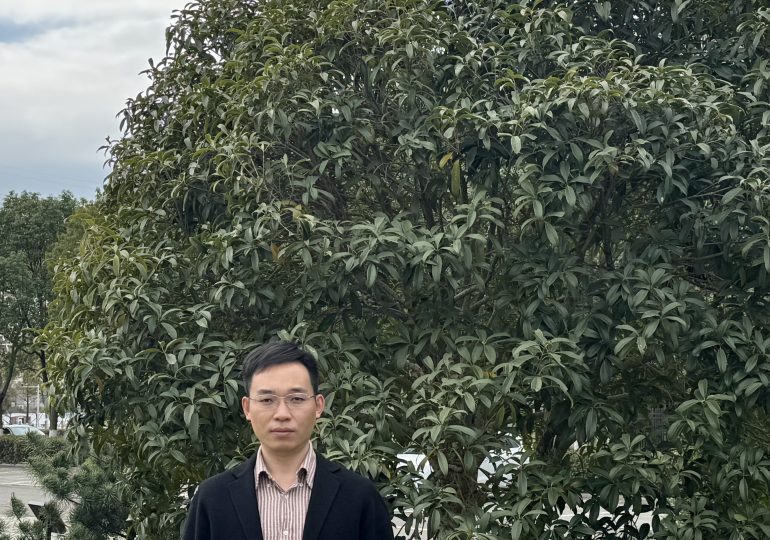
2024 HALDANE PRIZE SHORTLIST: Lifeng Wang discusses the paper “Soil fauna trophic multifunctionality mediates the release of elements from decomposing typhoon-generated leaf litter“, which has been shortlisted for Functional Ecology’s 2025 Haldane Prize for Early Career Researchers
About the paper
Typhoons cause large pulse fluxes of leaves that have not undergone senescence (i.e. green litter) to forest soils, with consequences for biogeochemical cycling. Elements released during litter decomposition can facilitate forest recovery by linking organismal traits and nutrient constraints to carbon cycling. Our paper asks how typhoon-generated green litter alters multi-element release during decomposition. We compared element release of green vs. naturally senesced litter, and tested the roles of substrate quality and litter fauna trophic multifunctionality as a driver.
We found that litter substrate chemistry directly affected the release of elements, and its influence was stronger in decomposing senesced litter compared to green litter. Litter fauna functional groups showed significantly positive correlation, and the whole trophic multifunctionality was significantly higher in decomposing green litter compared to senesced litter and stimulated the release of elements.
Extreme climate events and their intensity, frequency, and timings can strongly reshape decomposition dynamics, and it is therefore crucial to understand how the mixing of green and senesced litter alters decomposition and, more broadly, how these pathways influence soil organic matter turnover. Furthermore, we need to disentangle bottom-up and top-down trophic effects within detrital food web under typhoon disturbance, and to quantify the associated energy flows. More generally, an integrated framework to predict how belowground communities, processes, and functions respond to multi-extreme climate events and their interactive effects across and within ecosystems is important.
As cyclones intensify, almost all the coastal forests may experience more frequent pulses of green litter and associated nutrient fluxes. Our results suggest that the fate of these pulses depends not only on litter chemistry but also on belowground biodiversity and food-web functioning. For management, protecting litter layer and soil biodiversity may help forests buffer extreme events by promoting efficient nutrient cycling and recovery. Policymakers should consider incorporating extreme climate events into ecosystem restoration planning and C assessments.
About the author
At first, I pursued graduate study simply to make up for my regret that I hadn’t worked hard enough in university. Early in my master’s stages, I only enjoyed the breathtaking scenery of alpine treeline during fieldwork although harsh conditions. Gradually, I realized many great soil ecologists were tackling treeline because it is sensitive to global change, and found that above the treeline there is often a shrubline, which ultimately shaped my PhD topic: litter decomposition under shrub encroachment. I can’t pinpoint when I “met” ecology—but I have fell in love with ecology along the way.
I am a lecturer at Taizhou University (Zhejiang, China). My research explores how extreme climate events (e.g., typhoons, freezing events, rainfall, and drought) affect forest litter decomposition, detrital food webs, and soil organic matter turnover.
This paper was my first publication after finishing my PhD and starting my academic position, and it gave me tremendous confidence to pursue tropical cyclone ecology. Building on that experience, I have been thinking that more intense typhoons, can drive greater canopy opening, reshaping microclimate, yet when typhoons strike earlier in the season—before leaf senescence—they can generate greener leaf. Currently, I am now determining how typhoon intensity and typhoon timing influence element release during litter decomposition.
I have three pieces of advice for someone in my field: first, read widely—this is the best way to understand where the field is and what the next questions should be. Second, spend more time in the field—can spark countless research ideas. Third, build collaborations – they can greatly strengthen your work.
I am especially grateful to Craig R. See (https://orcid.org/0000-0003-4154-8307), François-Xavier Joly (https://orcid.org/0000-0002-4453-865X), and many colleagues —their support in how to frame questions and solve problems has meant a great deal to me.
X account: @lifeng_china