

2025 HALDANE PRIZE SHORTLIST: Xiaojing Zhang discusses her paper “Mycelium biomass and community composition impact nutrient concentration in arbuscular mycorrhizal fungi at fine spatial scale“, which has been shortlisted for Functional Ecology’s 2025 Haldane Prize for Early Career Researchers.
About the paper
Although AM fungi mediate nutrient exchange between plants and soil, how their own nutrient traits respond to fine scale variability remains unclear. Our paper investigates the drivers of nutrient traits in extraradical mycelium of arbuscular mycorrhizal (AM) fungi under fine scale.
We test whether mycelial nutrient vary synchronously with host plants and surrounding soil or exhibit independent, asynchronous patterns. By disentangling these relationships, we aim to determine whether AM fungal mycelium passively reflects plant soil nutrient conditions or actively regulates its nutrient composition according to its own ecological strategy.
I still vividly remember when Professor Haiyang Zhang carefully lifted a clump of cleaned mycelium from the mesh. We were all astonished that a single hyphal in-growth bag could yield such a substantial amoumt of fungal biomass. That moment not only surprised me, but also strengthened my confidence in the feasibility of quantifying fungal biomass and nutrient traits in my subsequent research.
AM fungal mycelium is extremely fine and invisible to the naked eye in soil, and its extraradical hyphae are difficult to separate. Isolating fungi from hyphal ingrowth bags was extremely challenging, and developing methods to measure trace nutrients, especially phosphorus in tiny mycelium samples, required multiple trials. After repeated attempts, we successfully established reliable extraction and analysis protocols, enabling accurate quantification of fungal nutrient dynamics at this fine scale.
The next step will be to unravel the stoichiometry and homeostatic traits of AM fungal mycelium, and to elucidate the ecological mechanisms by which plants allocate carbon to these fungi. Understanding how mycelial functional traits respond to global change will provide critical insights into the adaptive strategies of plant–fungus symbioses and their roles in ecosystem nutrient cycling.
Erguna Meadow Steppe (Credit: Zhang Xiaojing, Erguna Meadow Steppe)
Our research helps explain how AM fungi regulate carbon and nutrient cycling under environmental change. This improves our ability to predict how ecosystems respond to challenges such as climate change and intensive land management.
In practice, our findings highlight the importance of considering soil fungi in agricultural and ecosystem management. By supporting mycorrhizal functions, we can promote more efficient nutrient use, healthier soils, and more sustainable production systems.
About the author
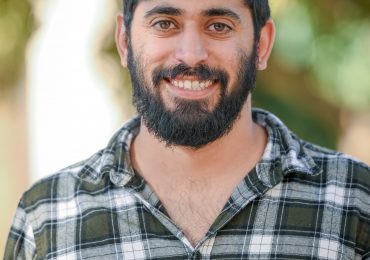
I have always loved outdoor activities, especially hiking, and immersing myself in nature. This passion led me to pursue a master’s degree in Marine Biology at Ocean University of China, where I focused on shrimp-associated microbiota. I became interested in ecology through a friend working in the field, whose forest fieldwork inspired me. After working for some time, I decided to pursue a PhD in ecology. I was fortunate to join the research group of Xingguo Han at Hebei University, where, under the guidance of Professor Han and Haiyang Zhang, I began investigating AM fungal traits in grassland ecosystems. I am currently a PhD candidate nearing graduation and currently in the final stage of preparing my doctoral dissertation.
I have continued to build on this line of research. Under different nutrient addition scenarios, I further investigated the variation and homeostasis of AM fungal mycelial nutrient traits. I also examined plant carbon allocation strategies to AM fungi and the coupling between plant–fungus carbon and nutrient dynamics across different nutrient conditions. In addition, I expanded the focus to other key elements, such as potassium, exploring its above- and belowground cycling in grassland ecosystems and its implications for plant–fungus interactions.
One piece of advice I would give is to remain patient and persistent. Working with soil microbes can be technically challenging, but careful methodology and repeated validation are essential for producing reliable results.
Read the full list of articles shortlisted for the 2025 Haldane Prize here.
Leave a comment