BRISBANE, Saturday 17 January 2026 — As one of the most significant nature protection agreements in history, the Global Ocean Treaty, comes into force today, Greenpeace Australia Pacific says there’s no time to waste for Australia to pass the legislation and start protecting the high seas.
The Global Ocean Treaty, the most significant piece of environmental legislation since the Paris Agreement, is the foundation that will enable governments to propose and establish world-first high-seas ocean sanctuaries, where millions of species and underwater wonderlands can rest, thrive, and recover. It legally enters into force today, after two decades of global campaigning.
It comes as Greenpeace Australia Pacific unveiled a major street mural in New Farm, Brisbane, celebrating the treaty’s introduction as part of a Greenpeace global mural campaign, with artworks being unveiled in 13 countries across five continents. The global action also marks the beginning of a crucial countdown to protect 30% of the world’s ocean by 2030.
Elle Lawless, senior nature campaigner at Greenpeace Australia Pacific, said: “Today, the ocean can breathe a sigh of relief – this treaty coming into force marks the beginning of widespread high seas protection. To date, the management of our ocean has been fragmented; there is now a legal global framework that enables countries to create marine sanctuaries in the high seas. Robust ocean sanctuaries can help save the ocean, which is struggling under the pressure of global heating, pollution and industrial fishing.”
Australia signed the Global Ocean Treaty (also known as the High Seas Biodiversity Treaty or the ‘BBNJ’ Agreement) in 2023, but has yet to ratify it. When it does, Australia will be able to propose high seas marine sanctuaries at the first-ever Oceans Conference of the Parties (COP1) later this year.
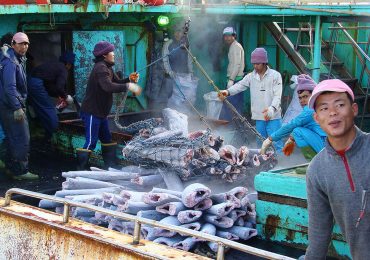
“This is a historic turning point, but there’s no time to waste. Every day that passes, the ocean suffers at the hands and hooks of industrial fishing. The Australian government has already shown domestic leadership with Marine Protected Areas close to shore – now it’s time to get on with legislating the treaty and proposing high seas sanctuaries, including in the Tasman Sea,” Lawless said.
“At the first-ever Oceans COP, governments must act with ambition, urgency and science to turn this landmark agreement into thriving ocean sanctuaries that protect marine life and our shared future. Crucially, this means ensuring these high seas sanctuaries are fully and highly protected against industrial fishing corporations that pillage and profit from these special places. There can be no room for industrial fisheries influence in the design of these sanctuaries. Australia must ratify now for a seat at the table, and champion legitimate, strong protections.”
The Pacific is already leading the charge, with Tuvalu, Vanuatu, Fiji, the Solomon Islands, Palau, the Federated States of Micronesia and Kiribati having ratified the treaty.
Currently, less than 1% of the high seas are highly or fully protected. Closing the High Seas protection gap from under 1% to 30% in four years, to meet the globally-agreed 30×30 target, will require governments to protect ocean areas larger than entire continents and to do so faster than any conservation effort in history.
—ENDS—
For more information or to arrange an interview, please contact Kimberley Bernard on +61 407 581 404 or kbernard@greenpeace.org
Leave a comment