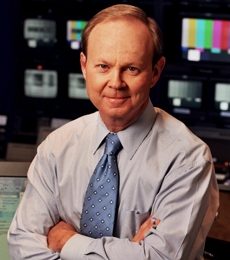
This month, we spoke with Emmanuel Awuni, Director at SHARED (Sustainable Health And Resilient Environments for Development), a non-profit dedicated to fostering a sustainable future through the One Health approach. SHARED recognizes the interconnectedness of animal, human, and environmental health and work to establish evidence-based policies that promote wellbeing.
Emmanuel is a physiotherapy professional with nearly half a decade of clinical experience. Discovering effective altruism led him to pursue a high- impact path beyond healthcare. In this interview, Emmanuel discusses SHARED’s role in integrating farmed animal welfare into public health and environmental policy, and their recent work shaping aquaculture regulations in Ghana.
Can you share an overview of what SHARED does?
SHARED is a Ghana-based organization focused on farmed animal policy across Africa. We use a One Health approach, recognizing that animal health, human health, and environmental health are deeply interconnected, to advocate for evidence-based interventions that benefit farmed animals while simultaneously advancing public health and environmental outcomes.
Our mission is to reduce animal suffering, improve human health, and protect the environment through collaborative, holistic solutions. Our vision is a future where the wellbeing of animals, humans, and ecosystems across Africa is mutually reinforcing, leading to thriving communities and flourishing environments.
How does SHARED identify interventions that can simultaneously improve animal welfare, public health, and environmental resilience?
Animal welfare as a standalone issue rarely rises to the top of government agendas in Africa. So rather than advocate for it in isolation, we identify interventions where animal welfare intersects meaningfully with public health or environmental priorities, areas governments are already motivated to act on. Through research, we find those overlapping spaces and build the evidence base needed to make our case. This approach allows us to drive real, policy-level change for farmed animals while working within the priorities and systems that actually shape decisions on the ground.
What were the key findings from your recent report on aquaculture and fish welfare in Ghana?
We collaborated with Naveeth of AWASH to produce an evidence-based assessment of fish welfare in Ghana’s aquaculture sector, named Aquaculture and Fish Welfare in Ghana. Key findings include:
Scale and concentration. Ghana’s farmed fish production grew from 7,500 MT in 2009 to 100,000 MT in 2023, an increase of roughly 250 million fish per year. About 90% of production is Nile tilapia cage-farmed on Lake Volta, with approximately 101 producers accounting for 90% of output.
No legal protections exist. There are no enforceable standards for stocking density, water quality, handling, transport, or slaughter. Fish welfare depends entirely on individual farmer discretion.
Disease is widespread. ISKNV (Infectious spleen and kidney necrosis virus)
was found in 80% of the farms, bacterial pathogens in 68%, and farmers reported median mortality rates of 70%.
Hatcheries are a critical welfare bottleneck. Survival rates in Ghanaian hatcheries are typically 40–70%, compared with 80–90% in grow-out systems. Pathogens have been detected in broodstock, eggs, and early life stages, yet no major initiative has directly targeted hatchery welfare.
Stocking density is the highest-impact, lowest-cost intervention. Overstocking drives both welfare and productivity problems. Reducing density requires no capital investment and improves feed conversion, significant given that feed accounts for 60–70% of production costs.
The government can deliver at scale when motivated. The ISKNV vaccination programme demonstrated that national-level implementation capacity exists. The constraint is political priority, not institutional ability.
Act 1146 creates a time-limited regulatory window. Implementing regulations must be drafted within a year. The Act’s licensing and enforcement framework can accommodate welfare standards through subsidiary regulations, without the need for new primary legislation.
Welfare must be framed around economics, not ethics. Across every project reviewed, interventions succeeded when linked to productivity, biosecurity, cost savings, or export readiness. Standalone ethical framing does not gain traction with farmers or government, and we design accordingly.
What are the most significant challenges you currently face in advancing your mission?
Every stage of this work comes with real friction, and we’ve had to be intentional about how we navigate it.
Animal welfare is rarely a government priority in Ghana or across much of Africa. We address this by anchoring our advocacy in interventions that serve interests governments already care about, while ensuring those interventions deliver the most impact for animals.
Government timelines can shift unpredictably due to consultation processes and approval bureaucracy. We’ve learned to build relationships with high-level individuals within our target institutions early, because trust at the right levels can move things faster than formal processes alone.
Weak enforcement is a systemic challenge across Sub-Saharan Africa. Rather than fight that reality, we design interventions that fit within existing enforcement frameworks while gradually building government capacity to do more.
Finally, as a lean organization operating remotely, we face practical challenges. Stakeholders sometimes want to visit a physical office, and maintaining one is also a compliance requirement. We’re actively fundraising to secure a permanent space that reflects the credibility of the work we’re doing.
How has the ACE Movement Grant helped strengthen SHARED’s work?
The ACE Movement Grant has been foundational to our progress. Policy advocacy for animals is challenging anywhere, but in Africa, where the field is still emerging, having funders who understand that and believe in what we’re building makes an enormous difference.
Our most recent and significant success was securing government agreement to include aquaculture health and fish welfare within the scope of implementing regulations under Ghana’s Fisheries and Aquaculture Act, 2025 (Act 1146). This scope expansion came directly from SHARED’s engagement with the Ministry of Fisheries and Aquaculture and the Fisheries Commission, and it would not have been possible without the support we received from ACE.
We’ve also been appointed to lead the Fish Health Cluster within the Technical Working Group, giving SHARED direct responsibility for drafting the fish health and welfare provisions. That’s a meaningful seat at the table, and it reflects what sustained, evidence-based engagement can achieve.
If you had to share a final message with the ACE audience, what would it be?
Farmed animal agriculture is expanding rapidly across Africa, and because it’s still in its early stages, there is a genuine window to shape how it develops. Today, we can influence the standards, practices, and regulations that govern it before harmful norms become entrenched.
Policy advocacy is one of the most powerful tools available to do that. But to be effective, it needs to be grounded in locally contextualised research, evidence that reflects the real conditions, incentives, and systems in African contexts, not transplanted assumptions from elsewhere.
Africa needs more researchers, more advocates, and more funders willing to invest in that work. The opportunity to get ahead of industrial animal agriculture on this continent is real. We shouldn’t let it pass.
Find more conversations in our Monthly Spotlight series.
Leave a comment