In this ‘Behind the Paper’ blog post, author Shudong Zhang, a postdoctoral researcher at Peking University, discusses his article ‘Potential lasting effect of opportunistic parasitic fungi on coarse wood decomposition’. He points to the potential lasting influence of plant pathogens on forest carbon cycling, discusses deer disruptions in the field, and shares his love of photography.
1. About the Paper
Forests store enormous amounts of carbon not only in living trees but also in the deadwood left behind. How fast this coarse woody debris decomposes determines whether forests continue to capture carbon or begin releasing it back to the atmosphere. Our study asked an ecological question that is often overlooked: could fungal infection before a tree’s death influence how its deadwood decomposes afterward?
We focused on Armillaria, commonly known as honey fungus. It is mainly recognized as a root pathogen that infects many tree species in forests and plantations. Armillaria can break down the main structural components of wood and lower its density, and its rhizomorphs and mycelial growth may move nutrients into woody tissues. Because these processes mostly occur below ground, it is still uncertain how much their influence reaches the upper parts of the tree. This uncertainty makes the transition from infection to decomposition an interesting ecological question.
To explore this connection, we compared Pinus nigra branches collected from infected and healthy stands. DNA analysis confirmed that Armillaria was present in the infected branches, meaning that the fungus was indeed living in the wood we studied. We found that decomposition was clearly faster in infected branches, and fitted decay models showed that their decomposition rate was about 1.8 to 2.5 times higher than that of healthy branches. This pattern suggests that fungal infection may leave behind structural or chemical changes in wood that continue to affect decomposition after the tree dies.
Our results point to a potential lasting influence of plant pathogens on forest carbon cycling. They may shape not only how trees die but also how their remains return to the soil, adding an often-overlooked layer to our understanding of forest carbon balance in a changing climate.
2. About the Research
Our research took place in the coastal dunes of the Netherlands, where Pinus nigra plantations have long been used to stabilize sand. Over the years, some stands became infected by Armillaria while others remained healthy. We collected fallen branches across a full range of decay stages from both types of sites with helps from the local nature authority (PWN).
Back in the laboratory, we cut the branches into equal sections and then measured wood density and chemical composition. Each piece was incubated for 1 to 1.6 years under identical outdoor conditions so that any difference in decomposition could be traced to infection rather than environment. We used a modeling approach based on relative wood density to estimate long-term decay rates.
The biggest challenge we faced in the field was discovering that deer were active in the area. They sometimes wandered into our plots and disturbed the layout of the samples. Because of this unexpected interference, we decided to retrieve the branches earlier than planned, after 1.6 years instead of the full two years originally intended. In total, we lost only three samples, which was a small proportion of all branches and did not affect our ability to analyse the data or interpret the results.
At the beginning, we were not sure whether Armillaria infection would have any measurable influence on decomposition. Yet the results turned out to be clear. Decomposition was indeed faster in infected branches. This unexpected result led us to propose the idea of a potential lasting effect of infection, where changes caused by the pathogen before tree death may continue to influence decomposition afterwards. The next step is to test whether similar patterns appear in larger pieces of wood such as trunks and in other tree species that interact with comparable pathogens. By doing so, we hope to understand more deeply how plant pathogens extend their influence beyond the life of their hosts, quietly shaping the long-term carbon cycle of forests.
3. About the Author
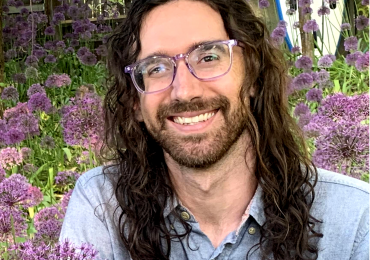
I am currently a postdoctoral researcher at Peking University. I was born in Yunnan Province in southwest China, a region often called the kingdom of biodiversity. Growing up, I spent much of my time in the mountains, wandering through forests and along small streams, fascinated by the living world around me. This early curiosity led me to study ecology at university.
During my PhD, I had the opportunity to work with Professor Hans Cornelissen at Vrije Universiteit Amsterdam, where I completed my doctoral degree. My research focuses on the links between decomposition and fire, particularly in plant litter and coarse woody debris, and on how biotic and abiotic disturbances shape these links. More about my work can be found at https://www.researchgate.net/profile/Shudong-Zhang-2
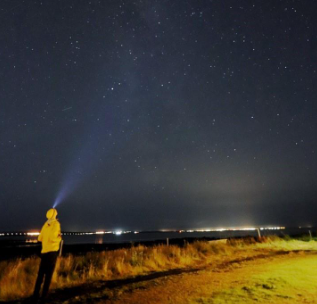
Outside research, I enjoy photography and like to capture quiet moments of natural beauty. I also love barbecues and iced cola. If I could give my younger self one piece of advice, it would be this: Do good work, and trust that meaning will follow.
Leave a comment