

Getting cold feet is inconvenient in many situations—including when you go to bed.
“Our body temperature leads our sleep cycle,” says Kenneth Diller, a professor of biomedical engineering at the University of Texas at Austin who has researched thermoregulation. “Your body does best when the central area is cooler, and the peripheral is warmer.”
Decades of research suggest that people with warm hands and feet fall asleep faster than those whose extremities are cold. Here’s why—plus the best ways to put it into practice.
[time-brightcove not-tgx=”true”]
The science behind it
When you’re getting ready for sleep, your body needs to cool down to signal that it’s time to rest. Ironically, warming your hands and feet helps that happen, because your body uses them as heat-release zones, Diller says. When your extremities are warm, blood flows more easily to the skin, allowing excess heat from your core to escape. As your core temperature drops, your brain gets the message that it’s time to fall asleep. If your hands and feet stay cold, however, that heat can’t escape as well—making it harder to drift off.
Read More: The Best Way to Treat Insomnia
Warming up your hands and feet “leads your body very effectively into sleep,” Diller says. Otherwise, “you just lie there feeling miserable.”
The best warming techniques
Years ago, Diller’s wife came up with a rule. “There was an absolute law within our family that when I have icicle hands and feet, there’s a virtual impenetrable barrier between the two sides of our bed,” he says. Fortunately, you can warm up your hands and feet before going to bed in a variety of ways.
One of the most obvious: taking a hot shower or bath. Diller usually works out in the evening, then jumps in the shower. At the end, he “cranks the temperature up to where initially it’s a little bit painful, but you get used to it,” he says. (Do not, however, exceed 111°F, which he points out is the threshold for thermal injury.) “I was getting a shower one night and I looked down at my hands, and they were red,” he says, which signaled that blood was traveling to the AVAs, or specialized blood vessels in the hands and feet that open wide to release heat. “I thought to myself, ‘I may have made a remarkable discovery.’”
Read More: Sleep Doctors Share the 1 Tip That’s Changed Their Lives
Diller also enjoys heating pads. One night, as he was investigating which heating techniques worked best, he slipped one underneath his pillow; when he and his wife turned in, they read for a while as he heated up the area overlying his cervical spine, which helps control the body’s temperature. “It’s like holding a match under the thermostat. It changes the operation of your thermal regulation,” he says. “Remarkably, my hands and feet very quickly, in short minutes, were toasty warm.”
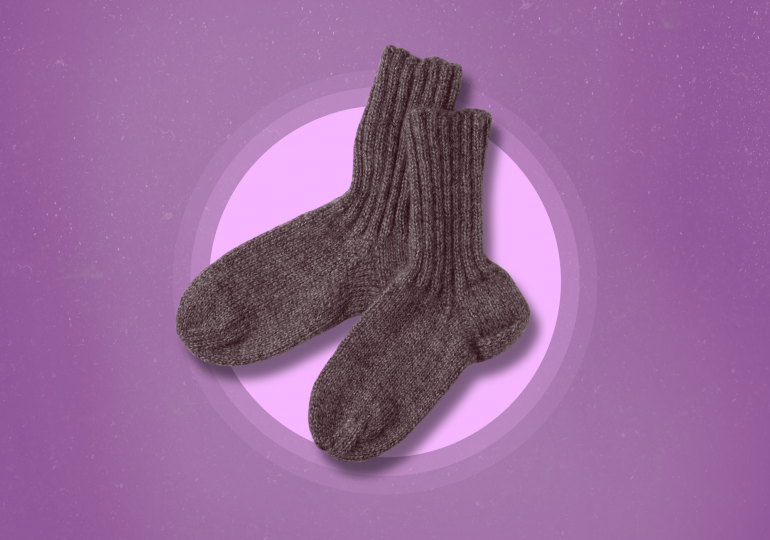
Of course, if you don’t feel like overly complicating your bedtime routine, you can simply slip on your favorite fuzzy socks. No matter how you approach it, the goal is to remove one of the body’s biggest barriers to sleep. Cold hands and feet keep the nervous system on alert; warmth helps it stand down.
“As long as I’ve got cold hands and feet,” Diller says, “I’m not going to be doing a good job of falling asleep.”
Leave a comment