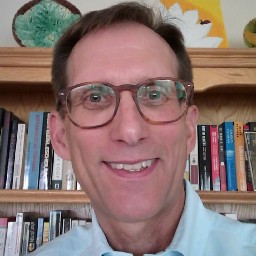
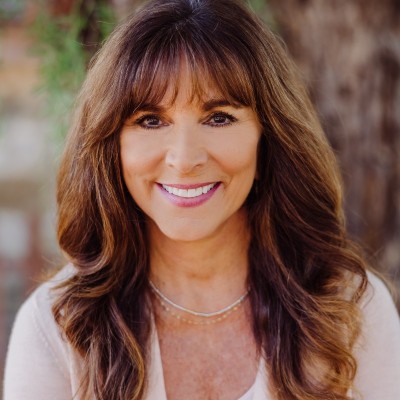
This is a transcript of my HIMSS interview with Bevey Miner, EVP Healthcare Strategy & Policy at Consensus Cloud Solutions. Usually I’d show the video but in this case my fancy new microphone didn’t work so you’d only hear a one sided conversation. Luckily Youtube’s transcript somewhat came to the rescue–Matthew Holt
Matthew: Another THCB Spotlight, I am here with Bevey Minor who a year ago I interviewed as Consensus Cloud Solutions and now your sign says eFax. So, what the hell happened?
Bevey: Interesting question, Matthew. The company is Consensus Cloud Solutions. And the company’s always been Consensus Cloud Solutions since we spun off and went public ourselves. You’ll notice at our booth we’ve got the eFax brand — it’s eFax by Consensus Cloud Solutions. The reason we are showing up as eFax is because this year at HIMSS we really wanted to set the record straight: digital cloud faxing is not the problem with interoperability. Paper faxes are, but digital cloud faxing is not the problem.
The problem is all this unstructured data — all the unstructured data that happens with faxes, with scanned images, with TIFF images. All that unstructured data can’t be queried. It can’t be part of TEFCA. You can’t query what you can’t find.
Cloud faxing is send and receive all day long, and we do that very well and have been doing it for 27 years. About three years ago, we introduced an intelligent extraction solution. That solution doesn’t even have to start with the fax, but it allows the “find” piece to actually become the critical thing that we need to do. CMS defines interoperability as send, receive, find, and integrate. Fax technology handles send and receive all day long, but can’t find. So once we introduced a “find and intelligent extraction” solution, we can fire up TEFCA.
I’ve talked to a lot of regulators, including Dr. Thomas Keane and Amy Gleason with the CMS Align networks. You can’t ignore this pile of unstructured data and just assume the industry is going to go magically everything’s on FHIR. We’re all using FHIR because all of this stuff has really important patient information in it.
What we want to solve in the industry is: don’t say we have to axe the digital cloud fax. Let’s axe the paper fax machine. Digital cloud faxing isn’t going away — in fact, it’s growing, especially as we get rural health off of paper fax machines. The next level of maturity is digital cloud faxing. From there, once it’s digital, now you can do all sorts of things with it.
When we introduced electronic health records during meaningful use — I was at Allscripts at the time — our dream was that we would take this paper record and transform it into an electronic health record, so we could just get rid of the paper. Once we did that and there were discrete data elements in that EHR, we could do population health, clinical decision support, efficacy, all sorts of things — because there are discrete data elements now inside that electronic health record. That’s what a digital fax will do with the capability to do intelligence on top of it.
So we want to make the industry understand that the fax is not the problem. Extracting it and getting rid of all that unstructured data is the solution.
Matthew: Okay. So since we last talked, I’ve had some journeys around the health care system. I was sent a referral from my lovely primary care doc at One Medical. Somehow the referral from One Medical got into the Blue Shield system and created a prior authorization. So I have an echocardiogram — I’ve written this up on my blog — and you know what’s coming next.
I call the number on the referral that One Medical wants me to call for the Marin Health imaging center, and they go, “We don’t have any referral.” I say, “No, no, no, they sent it to you, I see the PDF.” I call back two weeks later and they go, “I don’t know, we don’t have the referral.” So finally I call and say, “Can I email you the referral?” I get someone’s email and email them the PDF and that person goes, “Oh, this is a cardiology imaging referral, not a regular imaging referral.” It turns out it goes to cardiology, which is of course in the same building.
But here’s where it gets interesting. They say, “We can’t take an email” — they told it was because HIPAA wouldn’t allow it.. So I downloaded some fax product — I think it may have been eFax — a trial that later I had to remember to cancel. So I fax everything. Now they’ve got a referral which was typed on a PDF, and may or may not have a piece of paper somewhere with the prior auth as well. It’s arrived, and now they can actually do something with it.
What is wrong with that picture, and what can eFax do in that picture to fix it and get the data out that’s required to help?
Bevey: A lot of things are wrong. Number one, you’re going to get delayed treatment. You’re going to get frustrated as a patient, and your health outcomes — you may even abandon care.
Matthew: That’s actually what almost happened. I was about to abandon it. I did keep going — I actually do have a problem.
Bevey: But your health outcomes could have been horrific. But you bring up a really interesting use case that we are doing today with imaging centers. Hospitals that own their imaging centers, or IDNs that own imaging centers —
Matthew: this imaging center, by the way, has both cardiology imaging and regular imaging in the same building, but those are different fax numbers.
Bevey: So as an example — and this is an actual real use case we’re doing — we intercept the fax, we pull out all the structured data: all the patient demographic information, we pull out what the order is for. Let’s say it’s a mammogram with contrast. We map it into the radiology system so they can see the order without anyone data-entering anything. If it had come as a fax order, somebody still has to data-enter it, or it’s sitting in a pile of all these orders they’ve received.
Once it’s extracted and mapped into the imaging center’s RIS system, they can see — because we read that this isn’t just a mammogram, this is a mammogram with contrast. Now they can see: do we have a machine capable of a mammogram with contrast? Is that machine available on Monday, Tuesday, Wednesday? And once all that’s done, no human has actually touched this. It’s getting looked at and mapped into their scheduling system, so you can send a text message directly to the patient within 24 hours: “We’ve got your order and we have opportunities for you to come in Monday, Tuesday, or Wednesday.”
All of that is because we pulled out the structured data from that fax for that image. And for every day that a patient expected to get the next level of care but is delayed — a mammogram or some sort of imaging — 25% of trust in the system is eroded. That imaging center needs to get that referral because it’s their lifeblood. The patient is going to go somewhere else, or they could just say to the doctor, “They haven’t called me — find another place.”
Matthew: So if they had plugged in eFax somewhere in the middle of that workflow, the referral would have been intercepted, read, and automatically routed.
Bevey: The product that does that is called Clarity — that’s our AI data extraction piece. And once you’ve created all these discrete data elements, if the imaging center needed it in FHIR so it could be mapped, we can send that as a FHIR message. We have a semantic interface backbone. Once you’ve got all this extracted data, now you can do prompt-based queries on it — for example, “Show me all patients who need imaging with contrast because those machines are sitting unused and we need to get those patients in fast.” And then you can use prompt questions like on any generative AI solution
Matthew: I’ll tell you something amusing that leads to another question. Eventually after the fax goes through, somebody calls me back — and of course I don’t answer, it goes to voicemail. I see the transcription of the voicemail and they’ve arranged for me the very next available appointment, which happens to be in Santa Rosa — an hour from my house. So I go to MyChart thinking maybe I can change it. MyChart shows me the appointment but doesn’t give me the option to change it — only to cancel it. Eventually I got it changed to a location 10 minutes from my house.
But this leads to a question. You have faxes going back and forth between these departments, and this one is still very manually treated — manual appointment scheduling.But there is a whole lot of data in the EMR (Epic, Oracle, et al) There’s a lot of information sitting in there, with people trying to get it in and out by different methods, not all electronic. How does what you’re doing play into that?
Bevey: What’s interesting is that there’s a really big effort around patient access to their data. MyChart is an example. This administration — Trump’s promise and campaign was that every American would be able to access their medical information. And now we have a bunch of pledges happening around patient access to their data, with QR codes and things like that. But what do you do with all the unstructured data? A patient may have lab results, clinical information — the USCDI data set that gives the patient their entire history and summary — sitting in unstructured data that can’t be queried.
So the QHINs are only operating on a small subset of data that is FHIR-enabled structured data. It’s going to be biased, it’s going to have missing pieces. Patients are going to think, “Here’s all the information I need” — until they drill down and say, “Two years ago my hemoglobin A1C was pre-diabetic, I want to find that.” And it’s an unstructured PDF somewhere.
When you look at an electronic health record, there’s a lot of PDFs attached to the patient’s chart.
Matthew: I was just looking at mine. Both One Medical and Epic pieces have different structures. Some of them they processed internally and show me my lab numbers with a nice little indicator, but I’m not sure they’re all in one place.
Bevey: We have a lot of work to do to get a common record for patients. I have two MyChart accounts. It’s easy to link them, but I also see another system that uses FollowMyHealth or something like that, and it’s not integrating as it should.
I know the promise is great — I remember the days, and you probably do too, Matthew, where every patient was going to carry around a USB drive or a magical smart card.
Matthew: You can do that in France. Probably not available in America.
Bevey: But I do think there’s promise, and the promise is to really recognize that there’s a whole bunch of data. I look around at a lot of these companies here at HIMSS and they boast they do workflow enhancements, prior authorizations, population health — but when I ask them what they’re doing with all the unstructured data, they say, “We have an OCR solution.” Whenever I hear that, it’s not really extracting data at an intelligent level. OCR knows that something is a B, a V, and a Y — my first name — but doesn’t even know it’s a name. If you use intelligent extraction, it does contextual work: “Go find me the name of this patient in this form,” which could be in the upper left-hand corner or the bottom. It really understands how to ask the right kind of questions. OCR is a gap.
So we are playing a role where we can create very sophisticated intelligence off of all this unstructured data, so many of these workflow solutions can have better data going in.
I’ve talked to Dr. Thomas Keane, head of ONC, and I said: “Do you really want to make TEFCA successful? You’ve got to talk about how we manage getting all the unstructured data into a FHIR-enabled TEFCA framework.” And rural health — health equity has been a passion of mine — Rural health can’t rip and replace. They can’t support all the FHIR-enabled solutions they’re supposed to support. The CDC in their data modernization initiative is saying all electronic case reporting has to be done via FHIR — well, the community clinic definitely needs to populate these repositories, otherwise those databases are going to be completely biased.
And if you look at the prior authorization rule 57 going live January 1st for Medicare Advantage patients — what is that substance abuse clinic that needs to ask for an authorization so a patient can stay in treatment for another 90 days? They can’t send a FHIR-enabled prior authorization to get that approved. We intercept their fax. We say to them — and we do a lot in rural health — “Just keep doing what you’re doing. We’ll intercept it in the middle and send that as a FHIR prior authorization.” The industry needs to understand that not every provider has tech equity.
Matthew: Alright, give me your forecast. There are all these different holes — unstructured data, ambient AI, people asking CharGPT questions. Do you think the consumer, patient, smaller provider (or any provider) experience gets a lot better in two years, or are we still fighting this? Is Amy Gleason’s team going to succeed, or are we still going to be in a war in five years’ time?
Bevey: I still think healthcare is transactional. If everybody was in a closed system, everybody talked Epic, it would be great. But we don’t have that kind of system. And this is an administration of deregulation — open for whatever you think you can do from an innovation perspective. When you have tight regulation, you see solutions emerge that actually help providers and technology companies satisfy that regulation — which is happening with prior authorization, which is why we’re really helpful for those that don’t have FHIR resources.
But with deregulation and pledges, I think in two years if you gave me the same interview, we would see some baby steps. And also because there’s a growing consciousness among patients — “I can actually do a lot with AI. I can push hard on my docs. I can say this is the best treatment.” And not always use Western medicine to do that. Patients are going to hold a ton of power, and with that power they’re going to say, “I have a responsibility to take care of my health.” I think that’s going to move faster than we even thought, especially with ChatGPT Health, Gemini — patients are using these tools. They’re reading their reports and asking questions.
Matthew: I’ve uploaded a lot of my reports from my imaging and I now use it all the time. But you know, there are people who have been dragging their feet, and a couple of years into this, it’s starting to feel like fantasy being repeated three or four years in a row. So I’m hopeful, but I’ll acknowledge the joke of the moment. I do think there’s a lot of consensus that we’ve got to get some stuff done.
You and I have been doing this long enough to remember when you could go anywhere with your data, and now everyone else is fighting over information blocking.
Bevey: The patients don’t care what the pipes look like at the back end. The docs don’t even care. The docs are saying, “I don’t care what you do as a technology vendor. I don’t need to see all the stuff flowing through. I just need information so I can make a more informed decision, treat my patients the best way, and make money doing it.”
We’re going to have some headwinds where a lot of hospital systems are going to have to deal with uncompensated care. HIMSS is a little light this year, and I think hospitals are looking at budgets and saying, “We can’t give you the same IT budget to go shopping. We’re going to have to shut down service lines — behavioral health, women’s health — just to manage the uncompensated care.” That’s a new world we never thought we’d see. But I think we’ve got to weather through that too.
Matthew: I’ve been speaking with Bevey Miner from Consensus Cloud Solutions, Thanks for your time
Leave a comment